Polis Consultores

Services to decide, anticipate, and act

Crises are managed here and now — not once the profits are already gone.

Our services are designed to help national and international companies, investors, law firms, embassies, boards of directors, and international organizations make decisions in contexts of high political, economic, regulatory, social, and reputational uncertainty, with a strict approach to confidentiality for clients with strategic interests in Venezuela, Colombia, and Mexico.

At Polis Consultores, we are committed to staying at the forefront through the strategic implementation of emerging technologies across all of our services. Recognizing the inherent ethical challenges and the paramount importance of transparency, we adopt innovative technologies such as Artificial Intelligence and Big Data. These tools are conceived as instruments that strengthen the gathering and initial processing of information, without diminishing the indispensable human judgment required for the analysis and interpretation of data — an essential element in delivering personalized, high-quality support to our clients.

Strategic monitoring and early warning

Ongoing intelligence for executive decisions

A monitoring, analysis, and early-warning service for companies with current or potential exposure in complex markets. It integrates political, economic, regulatory, social, institutional, and international monitoring, with an emphasis on signals that could affect operations, reputation, security, compliance, investments, or institutional relationships.

Includes

-Periodic political-risk report.
-Early warnings for critical events.
-Short- and medium-term scenarios.
-Tracking of actors and incentives.
-Reading of regulatory, social, and institutional signals.
-Executive interpretation meetings.
-Recommendations for committees or boards of directors.

Ideal for national and international companies, embassies, international organizations, and NGOs with strategic interests in Venezuela, Colombia, and Mexico.

Exposure, entry, or permanence diagnostics

Deciding whether to enter, wait, move forward, protect, or avoid exposure

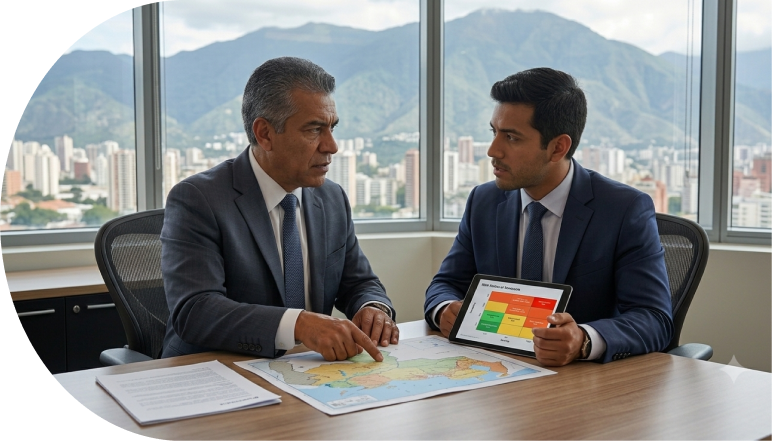
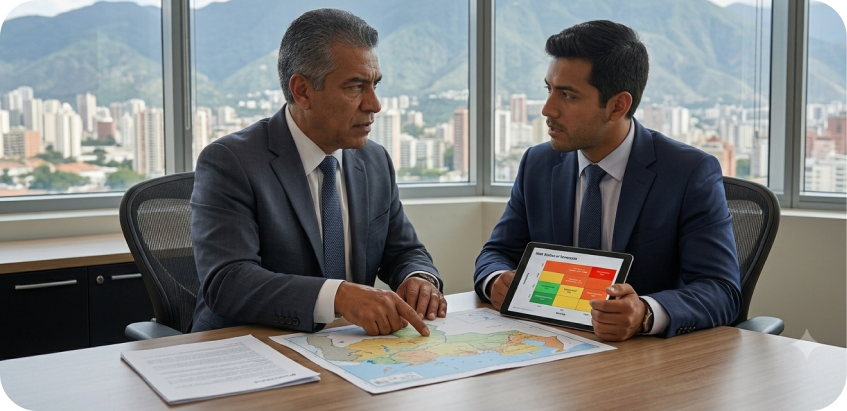
A strategic diagnostic for companies evaluating entry, re-entry, expansion, permanence, exposure reduction, or asset protection in any of the countries where our network of capabilities operates. This service enables the analysis of risks, minimum conditions, relevant actors, regulatory constraints, political signals, reputational exposure, and probable scenarios.
Answers questions such as
• Is it worth entering or expanding into this market?
• Is it worth waiting or conditioning the decision?
• What risks need to be mitigated before moving forward?
• Which actors could affect the operation or project?
• How can assets, personnel, reputation, and continuity be protected?
• What scenarios would change the recommendation?
• What should the board know before approving a decision?

Deliverable
An executive diagnostic report with a strategic recommendation, risk matrix, stakeholder map, scenarios, and decision roadmap.

Stakeholder, power, and influence mapping

Understanding who the relevant actors are, what they decide, and what could change

In complex environments, formal organizational charts rarely explain, on their own, how decisions actually get made. This service identifies who the relevant actors are, their interests, incentives, constraints, networks of influence, veto power, engagement risks, and possible legitimate paths for influence.


Includes
• Mapping of political, institutional, business, social, community, and international actors.
• Analysis of interests and incentives.
• Identification of formal and informal actors.
• Assessment of capacity to influence.
• Reputational and regulatory risks of engagement.
• Prioritization of relevant actors.
• Responsible engagement strategy.

Ideal for national and international companies, governments, embassies, international organizations, and NGOs that need to understand who the relevant actors are, what they decide, and what could change.

Political, regulatory, and reputational due diligence

Assessing risk before deciding

A due-diligence service to assess political, regulatory, sanctions-related, reputational, and risks associated with partners, projects, sectors, territories, counterparties, or investment decisions.
Includes
• Risk assessment to support decision-making.
• Identification of regulatory and sanctions-related risks.
• Review of institutional and sector environment.
• Analysis of counterparties, relevant beneficiaries, and related actors.
• Early warning signals.
• Risk-mitigation recommendations.

Ideal for law firms, investors, multinational companies, funds, insurers, banks, sector operators, and organizations that need an independent review before moving forward.

Strategic crisis room

Support for decisions made under pressure

A strategic-response service for situations of political, regulatory, reputational, operational, or social crisis. The goal is to help the client quickly understand the environment, anticipate scenarios, sequence decisions, protect assets, manage relevant actors, and reduce reputational or operational damage.


Includes
• Accelerated situation diagnostics.
• Identification of immediate risks.
• Scenario evolution.
• Mapping of critical actors.
• Action recommendations.
• Communication and engagement strategy.
• Support for crisis committees.
• Intensive signal monitoring.

Ideal for national and international companies exposed to political events, social conflict, regulatory changes, reputational crises, sanctions, operational disruptions, risks to personnel, or sensitive institutional decisions.

Executive sessions for boards and committees

Strategic information for senior leadership

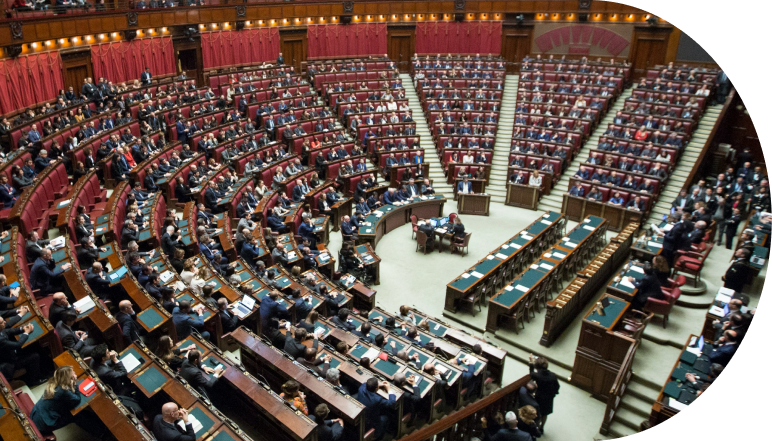
Confidential sessions for boards of directors, executive committees, headquarters, regional teams, law firms, investors, and international organizations. These sessions provide a clear, executive, forward-looking read on the situation of a country, sector, or strategic decision — its risks, scenarios, and implications for the business.

Types of sessions
• Strategic current-affairs briefing.
• Sector-specific.
• Scenario identification.
• Analysis of entry, re-entry, or expansion opportunities.
• Crisis-related.
• For boards of directors.

Ideal for executive teams that need to quickly understand what is happening, what could change, what decisions need to be prepared, and how.

Public affairs strategy and responsible engagement

Strategic engagement in sensitive environments

We design public affairs strategies, milieus management, strategic communication, legitimation, and responsible engagement with institutional, business, social, multilateral, and community actors. The goal is to help organizations operate with a better understanding of the environment, lower reputational exposure, and a greater capacity to build trust.

Includes
• Institutional engagement strategy.
• Mapping and prioritization of relevant actors.
• Strategic narrative.
• Legitimacy-risk assessment.
• Sociopolitical environment management.
• Executive communication strategy.
• Responsible-conduct guidelines.
• Monitoring of perception and social conflict.

Ideal for national and international companies, embassies, international organizations, and NGOs that need to build legitimacy, reduce environmental risk, engage with relevant actors, and sustain operations in politically sensitive contexts.

Scenario analysis and strategic foresight

Preparing for different possible futures

We identify political, economic, regulatory, social, and international scenarios to help organizations prepare for different possible courses of events. The goal is to identify plausible futures and trajectories, signals of change, accumulated risks, critical thresholds, and decisions that should be anticipated.


Includes
• Identification of plausible scenarios.
• Estimated probabilities by time horizon.
• Leading indicators.
• Critical risks.
• Assumptions to be monitored.
• Implications for the client.
• Preparation recommendations.l

Ideal for boards of directors and investors, national and international companies, embassies, international organizations, and NGOs exposed to high uncertainty, and organizations that need to prepare decisions under alternative scenarios.